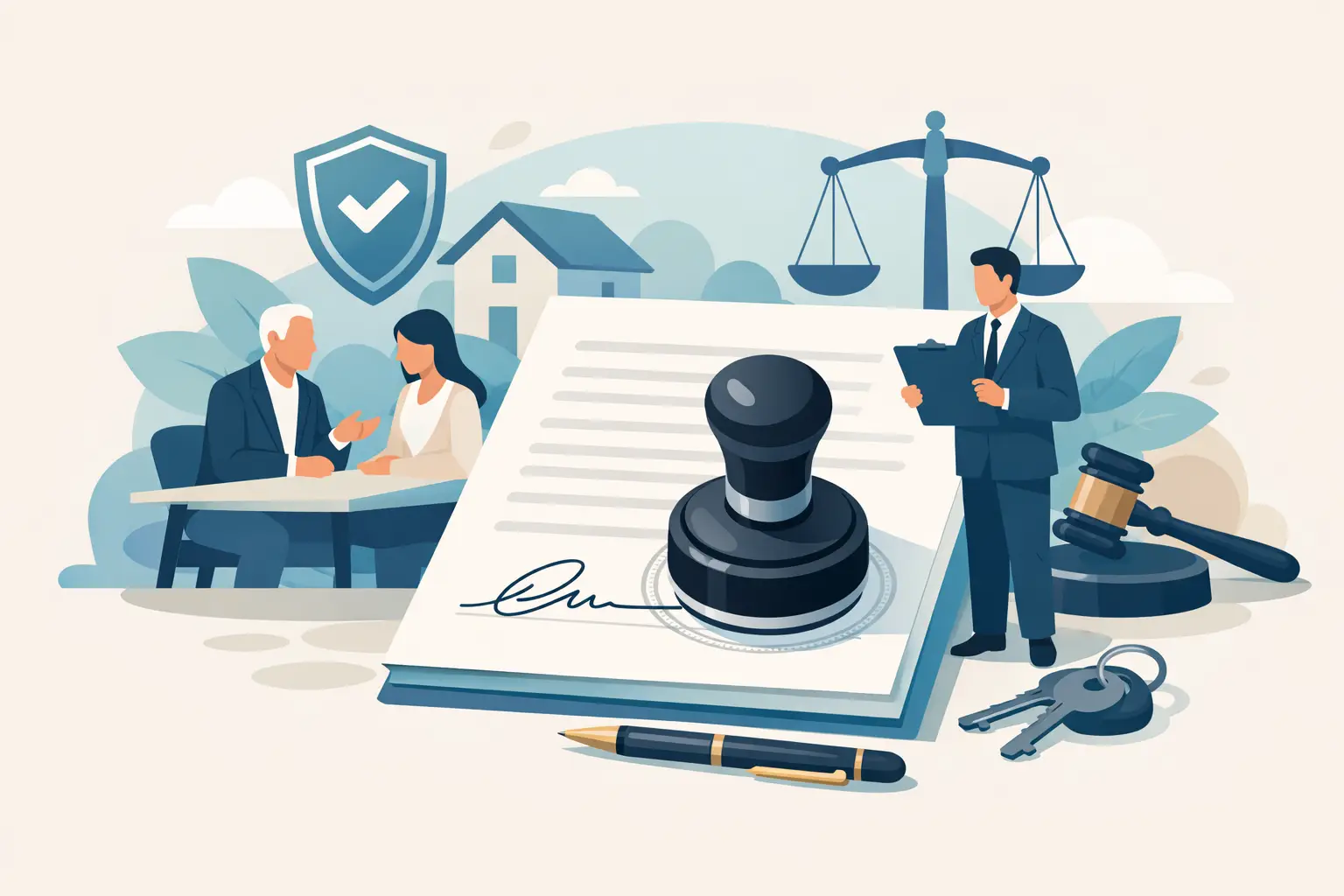
A power of attorney often shows up when families are already under pressure. Someone is preparing for surgery, helping an aging parent, handling a property matter, or trying to keep business and financial decisions moving during a health crisis. That is exactly why a clear guide to power of attorney notarization matters. The process is usually straightforward, but small mistakes can delay a document that people need to use right away.
Power of attorney documents give one person the authority to act on behalf of another. Because that authority can be broad and legally significant, the signing process needs to be handled carefully. Not every power of attorney follows the same rules, and not every situation can be fixed with a quick signature at the last minute. Knowing what the notary does, what the signer must provide, and where problems usually happen can save time and reduce stress.
What power of attorney notarization actually does
Notarization does not turn a weak document into a valid one, and it does not replace legal advice. What it does is verify the identity of the person signing, confirm that the signer appears willing to sign, and help deter fraud. For many power of attorney documents, notarization is required before the document will be accepted by banks, title companies, health care providers, or government offices.
That matters because a power of attorney is often presented to third parties that want confidence the document was signed properly. A clean notarization can make the difference between a smooth transaction and a frustrating rejection.
Some people assume the notary is there to explain the legal meaning of the form. That is not the notary’s role unless the notary is also acting as an attorney in a separate legal capacity. The safer approach is simple: have the document prepared correctly before the appointment, then use the notarization to complete the signing properly.
Guide to power of attorney notarization: what to prepare
The easiest appointments are the ones where the signer is ready before the notary arrives. That starts with having the full document in hand, not a partial draft and not a version missing signature pages. If the document requires witnesses, that should be confirmed in advance. Witness requirements vary depending on the type of document and the state involved.
The signer also needs acceptable identification. In most cases, that means a current government-issued photo ID such as a driver’s license, state ID, passport, or another acceptable form of identification under state law. Expired ID can be a problem, even when everyone knows the signer personally.
The signer must be present and able to communicate awareness of what they are signing. This is especially important with power of attorney documents because the authority being granted can be extensive. If the signer is heavily medicated, confused, unconscious, or unable to show they understand the act of signing, the notarization may need to be postponed. That can be hard for families to hear, especially in hospital or care situations, but it protects everyone involved.
If the document has blank spaces, those should be reviewed before the appointment. A notary may refuse to proceed if key sections are incomplete. The same goes for obvious alterations, missing pages, or uncertainty about which signature line should be used.
Who must appear for the notarization
The principal, meaning the person giving authority, is usually the one whose signature is notarized. The agent named in the document is often not required to be present for that notarization unless the document includes separate sections that the agent must also sign.
This is a common point of confusion. A son or daughter arranging the appointment for a parent may assume they can sign or answer on the parent’s behalf during the notarization. They cannot. The notary must deal directly with the signer whose signature is being notarized.
If the signer cannot physically sign in the usual way, state law may allow other methods in limited circumstances. Those situations need to be handled carefully and should be discussed before the appointment rather than during it.
Common reasons a power of attorney notarization gets delayed
Most delays come from issues that could have been spotted early. The signer may not have valid ID. The document may call for witnesses no one arranged. The family may expect the notary to choose the right power of attorney form or explain which powers should be granted. In other cases, the signer is not alert enough to proceed, even though relatives are eager to finish the paperwork.
Timing can also be a problem. People often wait until a medical event or real estate deadline makes the document urgent. At that point, there is less room to fix errors or reschedule. A power of attorney is one of those documents that is better handled before it becomes an emergency.
Even when the notarization goes smoothly, acceptance by the receiving institution is a separate issue. Banks and title companies sometimes have their own review standards. They may ask whether the document is recent enough, whether it includes specific powers, or whether it matches their internal policies. Notarization helps, but it does not override those requirements.
A practical guide to power of attorney notarization in sensitive settings
Power of attorney signings often happen in homes, hospitals, rehab facilities, and senior care settings. These appointments need a little more care and patience than a standard office notarization. The key question is not whether the signer is elderly or ill. The key question is whether the signer can understand the document and sign willingly.
A quiet room helps. Too many relatives speaking for the signer can create confusion or raise concerns about pressure. If the signer needs reading glasses, hearing assistance, or more time to respond, that should be addressed before the appointment starts. A rushed environment is rarely helpful.
If a family expects difficulty because the signer tires easily or has fluctuating lucidity, it is smart to schedule for the time of day when the signer is usually most alert. That small decision can make the appointment much smoother.
For clients in Buford and surrounding areas, a mobile notary service is often the practical solution in these situations. When the signer cannot travel easily, having a professional come to the home, hospital, or care facility removes one more obstacle from an already stressful day.
What a notary can and cannot do
A reliable notary helps keep the appointment organized, checks identification, confirms willingness and awareness, completes the certificate properly, and makes sure the signing is handled professionally. That part should feel efficient and stress-free.
There are also clear limits. A notary cannot decide which type of power of attorney you need. A notary cannot tell you whether the language gives enough authority for a home sale, banking transaction, or medical decision unless they are separately licensed to give legal advice. A notary also cannot ignore red flags just because the family is in a hurry.
That last point matters. People sometimes think a refusal is unhelpful, but a careful refusal can prevent bigger legal trouble later. If identity, willingness, or mental awareness is in question, stopping the appointment is often the right call.
How to make the appointment go smoothly
The best approach is simple. Confirm the document is complete, ask ahead of time if witnesses are needed, have the signer’s valid ID ready, and choose a time and place where the signer is comfortable and alert. If the signer is in a facility, make sure staff know a notary is coming and that visitors are permitted at that time.
It also helps to avoid signing before the notary arrives unless you have been specifically instructed to do so. Many notarizations require the signature to be acknowledged or witnessed in the notary’s presence, depending on the act being performed.
If the document will be used for a real estate, financial, or estate planning matter, it is worth double-checking with the receiving party or attorney beforehand. That extra call can prevent a second appointment later.
Pete’s Mobile Notary & Services regularly works with clients who need this kind of appointment handled quickly, correctly, and with as little friction as possible. When the document is important and the timing is tight, professionalism matters just as much as convenience.
A power of attorney is not just another form to sign. It is a document people rely on when life gets complicated fast. A careful notarization will not solve every legal question, but it can remove one major obstacle and help the next step happen on time.