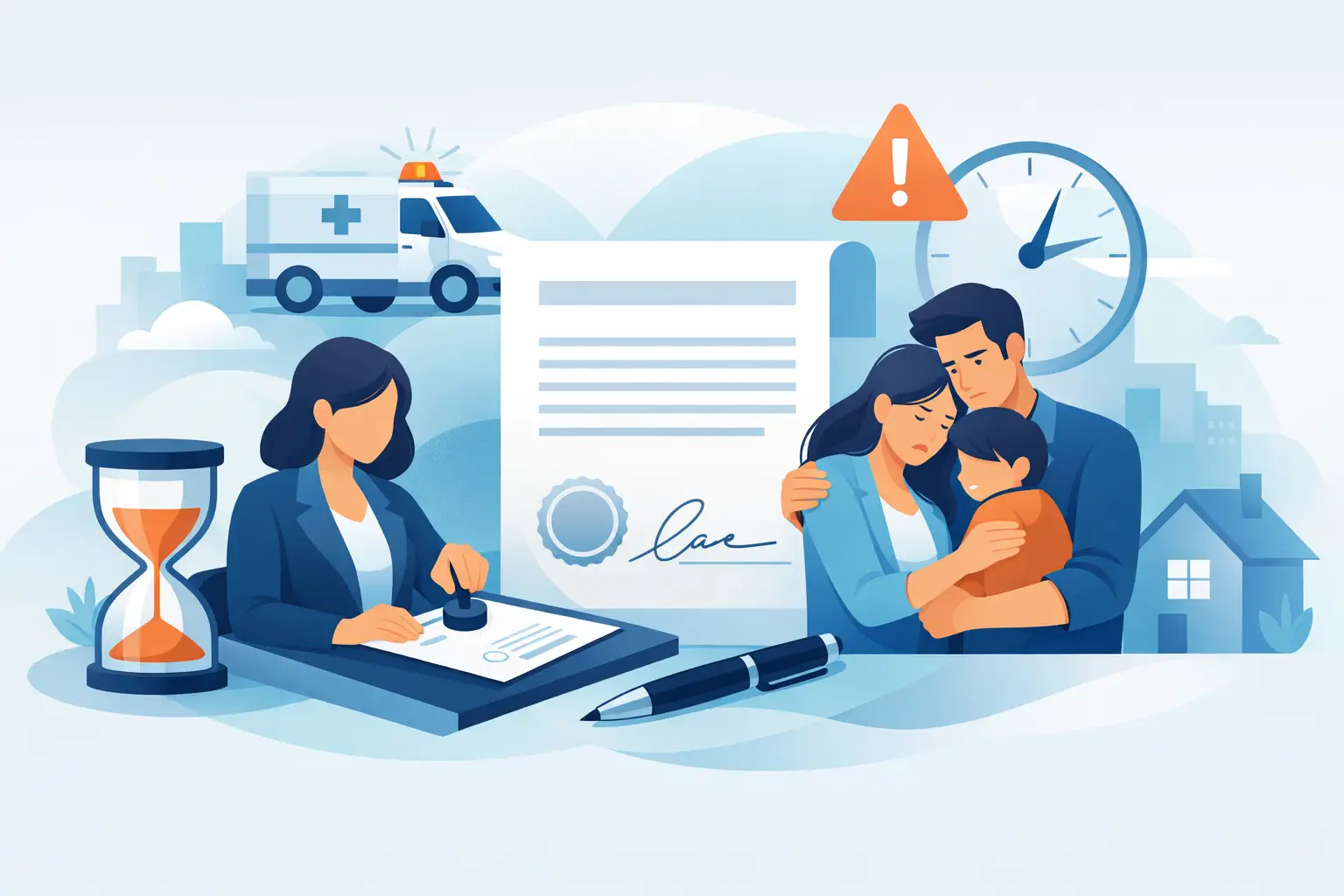
A hospital nurse says a power of attorney needs to be signed today. A parent’s estate documents are ready, but one family member cannot leave the house. A vehicle title must be completed before a sale falls through. These are the moments when paperwork stops feeling routine and starts carrying real weight.
Emergency notarization for families is about getting an important signing handled correctly when time, health, travel, or family circumstances make a standard appointment impractical. A mobile notary can meet you where you are – at home, a hospital, a rehabilitation center, an office, or another agreed location – so your family can focus on the decision in front of them rather than the logistics of finding a notary.
When a Family May Need an Emergency Notarization
Urgent notarization is often connected to documents that affect care, property, finances, or a loved one’s ability to make decisions. The need may arise suddenly, but the signing itself still has to meet Georgia’s notarial requirements.
A common example is a power of attorney. If someone is facing a medical procedure, declining health, or an unexpected hospitalization, a properly executed power of attorney may allow a trusted person to help manage financial, property, or health-related matters within the authority the document provides. Families may also need prompt service for advance directives, estate planning documents, affidavits, vehicle transfers, settlement paperwork, or documents requested by an attorney, lender, or title professional.
Not every urgent document needs a notary, and not every document that needs a notary can be completed the same day. Some documents require witnesses in addition to notarization. Others may have special instructions from an attorney, court, lender, healthcare provider, or receiving agency. The best approach is to confirm the document requirements before the appointment, rather than discovering a missing witness or identification issue at the signing table.
What Makes an Emergency Signing Valid
Speed matters, but accuracy matters just as much. A notary’s role is not to explain legal consequences, choose a document for your family, or decide whether someone should sign. The notary verifies identity, confirms willingness, and makes sure the signer appears aware of what they are signing.
The signer must be present and willing
The person whose signature is being notarized must personally appear before the notary. A spouse, adult child, caregiver, or attorney cannot sign for them unless the document and applicable law specifically allow that arrangement. A notary also must be satisfied that the signer is acting willingly, not under pressure from someone in the room.
This point can feel sensitive during a family emergency. Relatives may be trying to help, especially when a loved one is tired, in pain, or facing a difficult diagnosis. Still, the signer’s choice must be their own. A professional notary may ask others to step aside briefly to speak directly with the signer. That is not a delay or a lack of compassion. It is part of protecting the signer and the document.
The signer must be aware of the signing
A medical condition does not automatically prevent notarization. However, the signer must be able to understand, at a basic level, what they are doing and communicate that they intend to sign. A notary cannot proceed when a person is unconscious, heavily sedated, confused, or unable to show sufficient awareness of the transaction.
Families sometimes assume a hospital room makes a signing impossible. It does not. The question is whether the signer is alert, willing, and able to participate at the time of the appointment. If capacity is uncertain, speak with the attorney or healthcare team involved before arranging the notarization.
Acceptable identification must be available
The signer generally needs current, government-issued photo identification, such as a driver’s license, state ID, passport, or military ID. The name on the ID should reasonably match the name on the document. If identification is expired, missing, or does not match because of a name change, call ahead with the details. There may be options in some circumstances, but assumptions can create an unsuccessful appointment.
How to Prepare for a Fast, Low-Stress Appointment
The fastest emergency appointment is usually the one that has been prepared before the notary arrives. Gather the complete document, not just the signature page. Check that all pages are present and that the document has not already been signed where a signature must be witnessed by the notary.
Do not pre-sign a document unless the receiving party or attorney has confirmed that it is allowed. Many documents require the signer to sign in the notary’s presence. If the document includes blanks, ask the document preparer whether they must be completed before signing. A notary cannot tell you how to fill out legal forms or advise you on what information belongs in a blank field.
Also confirm whether witnesses are required. In Georgia, witness requirements can vary by document type. A will, for example, may involve witness requirements that are different from a basic affidavit or vehicle title. Witnesses should be adults who understand their role and, when possible, should be arranged before the appointment. The notary may be able to help identify practical next steps, but families should not assume the notary can serve as a witness or supply one without prior confirmation.
For a hospital or care facility appointment, let staff know that a notary is expected. Ask about visitor check-in procedures, parking, room access, and whether the signer is likely to be available at a certain time. Medical schedules change quickly. Coordinating with the facility can prevent a notary from arriving during treatment, imaging, or a period when the signer is resting.
Questions to Ask Before You Schedule
A few clear answers can prevent most urgent-signing problems. Before booking, be ready to state the type of document, the signer’s location, the desired time, and whether witnesses are required. Let the notary know if the signer has limited mobility, is in a hospital, has difficulty hearing, or may need extra time. These details help the appointment run respectfully and efficiently.
It is also wise to ask the document recipient whether an original signature is required and whether there are any special certificate, witness, or recording instructions. This is particularly relevant for real estate, estate, and lender documents. A notary can perform the notarization, but the receiving organization decides whether the completed document meets its specific business or legal requirements.
If there are multiple signers, confirm whether everyone must sign together. Some documents allow separate appointments, while others are designed for a single closing or execution session. Knowing this in advance can save a family from paying for multiple urgent visits or missing a deadline because one person was unavailable.
Choosing a Mobile Notary During a Family Emergency
When the matter is personal and time-sensitive, choose a notary who communicates clearly and treats the appointment with appropriate care. You should receive straightforward information about availability, travel, identification, witnesses, and what to have ready. Punctuality is especially valuable when family members, medical staff, attorneys, or real estate professionals are coordinating around one signing.
Pete’s Mobile Notary & Services provides mobile appointments for families who need important documents handled at a home, hospital, office, or other convenient location in Buford and nearby communities. The goal is simple: reduce avoidable stress while keeping the notarization process professional, confidential, and accurate.
A Calm Approach Helps Everyone
An emergency appointment does not have to become a rushed signing. Give the signer time to read the document or ask their attorney questions before the notary arrives. Have identification ready, confirm witness needs, and make sure the signer is comfortable and able to participate. If circumstances change and the signer is no longer alert or willing, pause the process and seek appropriate legal or medical guidance.
Families often cannot control the event that created the urgency. They can control the preparation around the document, and that preparation gives everyone a better chance to complete the signing with care.