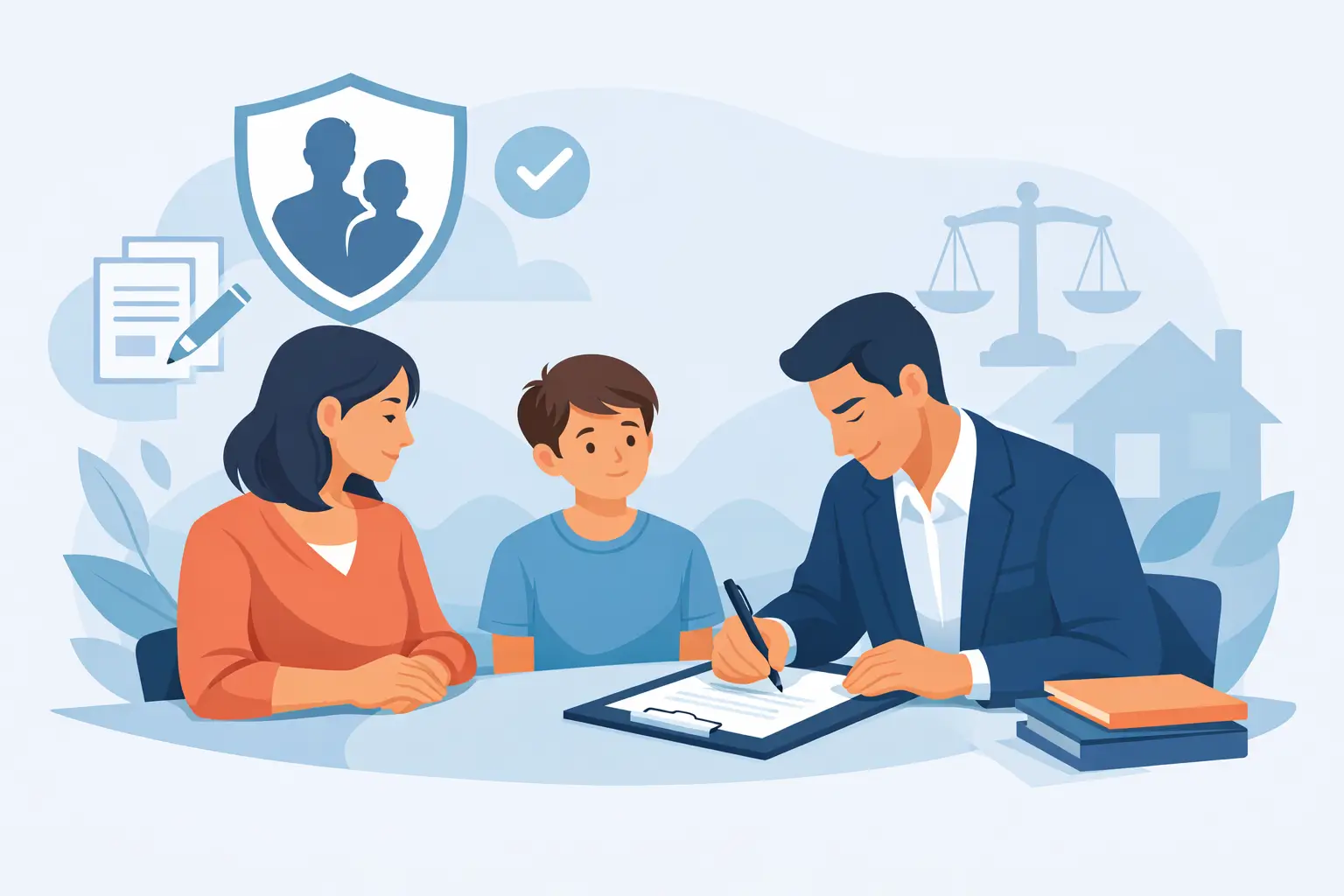
Guardianship documents often need attention when a family is already facing a difficult decision: a child needs a responsible adult appointed, or an adult can no longer safely manage personal or financial affairs. A clear guardianship paperwork signing example can help you understand what happens at the signing table, what a notary does, and what must be confirmed before anyone signs.
The details of a guardianship case depend on the court, the type of guardianship, and the people involved. For that reason, a notary cannot tell you which forms to file or whether your documents meet court requirements. A notary can, however, help make the signing portion accurate, organized, and convenient when notarization is required.
What Guardianship Paperwork May Include
Guardianship is a legal appointment made through a court. It may involve a minor child, an adult with limited capacity, or an adult who needs help with personal decisions. In some cases, there may also be a separate conservatorship or financial-management appointment. The names of the documents and signature requirements can vary.
A packet may contain a petition asking the court to appoint a guardian, consent or waiver forms, an acceptance of appointment, affidavits, verification pages, notices, or proposed orders. Some forms require signatures before a notary. Others require witnesses, court staff, or signatures after a hearing. Do not assume every page needs notarization just because it has a signature line.
Before scheduling a signing, review each document carefully. Look for a notarial certificate, often called an acknowledgment or jurat, beneath the signature line or on a separate page. If the form instructions are unclear, ask the attorney who prepared the documents or contact the appropriate probate court clerk for procedural guidance.
Guardianship Paperwork Signing Example: A Family Scenario
Consider a common situation. An adult daughter is petitioning to become guardian for her father, who is no longer able to make safe decisions about his daily care. An attorney prepares the required court packet. The daughter is listed as the petitioner, and the forms include her signed verification, an acceptance of appointment, and a consent form from another close family member.
The attorney tells the family that the verification and acceptance forms must be signed in front of a notary. The consent form also includes a notarial certificate. Because the father is in a care facility and the family is coordinating medical appointments, they arrange for a mobile notary to meet at a location convenient for the signers.
At the appointment, the notary begins by reviewing the documents for completed signature areas and notarial wording. The notary identifies each signer using acceptable, current identification. Each signer must be present, willing to sign, and aware of what they are signing. If a person appears confused, heavily medicated, pressured by another person, or unable to communicate a willingness to sign, the notary may need to stop the notarization.
The daughter signs the verification in the notary’s presence. If the form is a jurat, she takes an oath or affirmation that the statements are true to the best of her knowledge. She then signs the acceptance of appointment, acknowledging the responsibilities she would take on if the court appoints her. The other family member signs the consent form voluntarily in front of the notary.
After each required signature is completed, the notary fills out the certificate, signs, dates, and applies the official seal. The family keeps the completed originals together and returns them to the attorney or files them according to the court’s instructions. The court, not the notary, decides whether to grant the guardianship.
This example shows an essential distinction: notarization confirms the identity of the signer and the circumstances of the signature. It does not approve the guardianship, determine capacity, resolve family disagreements, or replace legal counsel.
What to Prepare Before the Notary Arrives
The easiest guardianship appointments are the ones prepared before the notary is at the door. Gather the full packet, not just the pages you believe need a seal. A missing page, blank notarial certificate, or overlooked witness requirement can create an avoidable delay.
Each signer should have an acceptable, unexpired government-issued photo ID unless a different identification method has been approved under applicable notary law. Names on identification should reasonably match the names printed on the documents. If there has been a recent name change, confirm with the document preparer whether supporting paperwork is needed.
Do not pre-sign pages that require notarization. Signers should wait until the notary is present. It is also wise to complete ordinary blanks before the appointment, such as case information, addresses, and dates, unless the document instructions say otherwise. A notary may not choose answers, advise what to write, or complete legal information on a signer’s behalf.
If witnesses are required, verify who must provide them. Some documents require disinterested witnesses, meaning people who do not benefit from the guardianship matter. A notary may be able to act as a witness only when permitted and when doing so does not conflict with the document’s requirements. This should be confirmed before the appointment, not during it.
Questions That Prevent Last-Minute Problems
A few direct questions can save significant time. Ask the attorney or court clerk whether the forms need an acknowledgment, a jurat, witnesses, or all three. Ask whether the court requires original signatures and whether every signer needs to appear at the same time.
You should also confirm who actually needs to sign. The proposed guardian, petitioner, parents of a minor, interested family members, and the person who needs a guardian may have different roles depending on the case. A signer should never be added simply because they are related to the family.
For appointments at a hospital, rehabilitation center, assisted living facility, or private residence, confirm that the signer is alert and available at the scheduled time. Privacy matters. The notary may need a brief opportunity to speak with the signer directly to confirm willingness and awareness, especially when the paperwork affects important personal rights.
When a Mobile Notary Is Especially Helpful
Guardianship paperwork does not always fit neatly into standard business hours. Families may be balancing work, care schedules, transportation challenges, or a court filing deadline. Traveling to multiple offices can add stress to an already sensitive process.
A mobile notary can meet signers at a home, office, hospital, care facility, or another agreed location. This can be particularly useful when a proposed guardian needs multiple documents notarized, several signers are involved, or mobility is limited. For families in Buford and surrounding communities, Pete’s Mobile Notary & Services provides a practical option for appointments that need to be handled promptly and professionally.
Convenience should never mean rushing. Plan enough time for each signer to review the document, ask the document preparer any needed questions beforehand, present identification, and sign without pressure. A careful appointment protects everyone involved and helps keep the paperwork moving toward filing.
A Final Check Before Filing
Once the signing is complete, compare the signed pages with the original packet instructions. Make sure every required signature is present, the notarial certificates are complete, dates are consistent, and witnesses have signed where required. Keep copies for your records, but follow the court’s instructions about filing original documents.
If anything seems incomplete, address it before submitting the packet. A guardianship request carries serious responsibilities, and careful paperwork is one practical way to show the court that the process has been handled with the care it deserves.