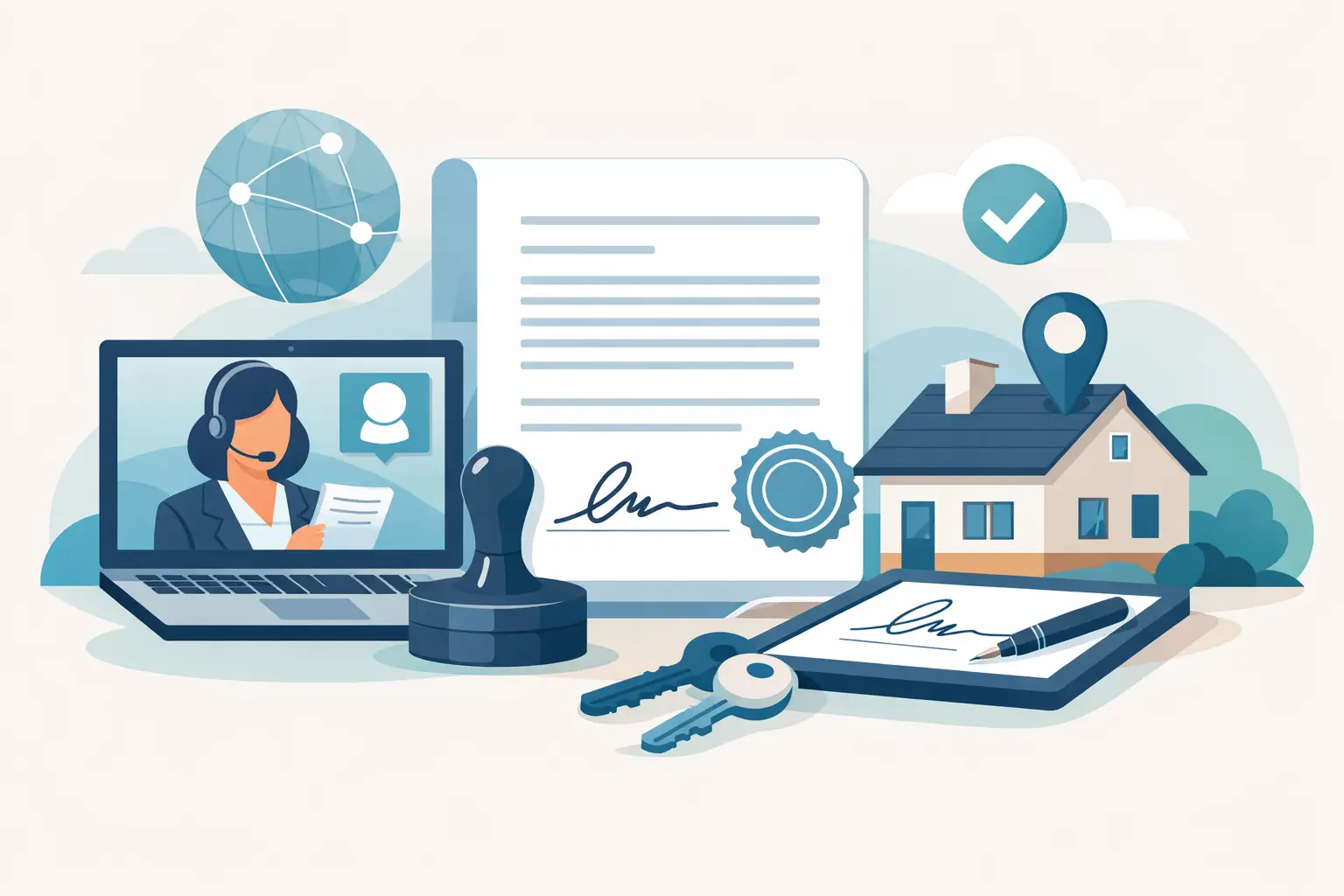
A closing day should move a real estate transaction forward, not create another scheduling problem. If you are asking, “what is a remote online notarization RON closing,” the short answer is this: it is a real estate signing completed through a secure live video session instead of with every person gathered around the same table.
For buyers, sellers, lenders, title professionals, and busy families, this option can remove travel time and make coordinating a signing much easier. It is not simply emailing documents back and forth. A properly handled digital closing follows a controlled process for confirming identity, witnessing signatures, applying an electronic notarial certificate, and creating a record of the session.
What Is a Remote Online Notarization RON Closing?
A remote online notarization RON closing is a real estate closing where a commissioned notary meets the signer through approved audio-video technology. The signer reviews and electronically signs eligible closing documents while the notary watches in real time. The notary verifies the signer’s identity, confirms that the signer is willing and aware of what they are signing, and completes the electronic notarization.
The experience may feel similar to a video meeting, but the safeguards are much stricter. The platform typically requires identity verification before the session begins. Depending on the transaction and platform, that can include knowledge-based questions, credential analysis of a government-issued ID, security codes, or other authentication steps. The system also creates an electronic journal entry and retains an audio-video recording as required by law and platform procedures.
For a qualifying transaction, the title company or lender sends the documents through the secure system. The signer joins at the scheduled time from a computer or mobile device with a camera, microphone, dependable internet connection, and a quiet place to focus. The notary guides the session, making sure each required signature and acknowledgment is completed correctly.
Why Digital Closings Appeal to Busy Clients
The biggest advantage is flexibility. A seller who has already moved, a buyer traveling for work, or a family managing a tight schedule may be able to sign without driving to an office or coordinating an in-person appointment. This can be especially helpful when several parties are in different locations.
A digital closing can also reduce last-minute pressure. Rather than trying to get everyone to one place before a funding cutoff, the parties can schedule a secure session that fits the transaction timeline. That said, convenience does not mean rushing. A signer should still receive enough time to read the paperwork, ask the title or lender representative questions, and understand what they are agreeing to.
For documents that are eligible and properly prepared, the process can be efficient, secure, and easier to coordinate. It may also provide a detailed digital trail that includes time stamps, identity-verification results, electronic records, and a recording of the notarial act.
How the Signing Process Usually Works
Each title company, lender, and approved platform may have slightly different procedures, but the general flow is straightforward.
Before the appointment
The closing team confirms that the transaction and documents can be completed electronically. They provide instructions for accessing the signing platform and may ask the signer to verify their identity before the appointment. This is the time to test the device, camera, microphone, and internet connection.
Signers should use their legal name exactly as it appears on their identification and closing documents. They should also have their unexpired government-issued photo ID ready. If a name has changed, an ID is expired, or the documents contain an error, address it before the session whenever possible. A small mismatch can delay a time-sensitive closing.
During the live video session
The notary confirms the signer’s identity and ability to participate. The signer must be present on camera, able to communicate directly, and willing to sign. The notary cannot complete the notarization if someone else is answering for the signer, coaching them off camera, or pressuring them to proceed.
The signer reviews the documents and applies electronic signatures where requested. The notary watches the required acts in real time and completes the electronic notarial certificate. If a question is about loan terms, settlement figures, title matters, or legal consequences, the notary does not give legal or financial advice. Those questions should go to the lender, title company, escrow officer, or attorney handling the transaction.
After completion
The completed electronic documents are returned through the authorized system to the closing team. The title company or lender reviews the package, resolves any remaining conditions, and proceeds according to the transaction’s funding and recording requirements.
A successful signing session does not always mean the transaction has already funded or recorded. Those steps depend on the closing instructions, title requirements, lender approval, county recording practices, and any final conditions that must be cleared.
When an In-Person Signing May Be Better
Not every real estate transaction qualifies for a digital closing. State rules, lender policies, title underwriter requirements, document type, county recording practices, and the location of the signer can all affect what is allowed. Some documents may need wet signatures, witnesses, or an in-person notarial act.
Technology can also be the deciding factor. If a signer has limited internet access, is uncomfortable using a computer, cannot pass the required identity checks, or needs extra assistance reviewing documents, a mobile appointment may be the more dependable option. An in-person signing can also be preferable for hospital visits, estate planning needs, sensitive family situations, or documents where the client wants the reassurance of having a professional physically present.
This is where a flexible notary service matters. The goal is not to force every client into one method. The goal is to use the signing method that keeps the paperwork accurate, lawful, and on schedule.
What Signers Should Do Before Closing Day
Preparation helps avoid preventable delays. Review your closing disclosure or settlement statement in advance, and contact the lender or title representative early if a figure, name, vesting detail, or payoff amount looks wrong. Do not wait until the notarial session to raise a major transaction question.
Choose a private, well-lit location where you can stay on camera without interruptions. Avoid public places, noisy vehicles, or shared spaces where private financial information could be overheard. Charge your device, use reliable internet, and keep your ID within reach.
Be alert for fraud as well. Real estate wire fraud remains a serious concern. Never rely on unexpected emailed wiring instructions or send funds based on a last-minute message alone. Confirm payment instructions through a known, independently verified phone number for your title or escrow contact. A notary is not authorized to direct wire transfers or change closing instructions.
A Better Fit for the Right Transaction
Digital closings are not a shortcut around the normal care required in a real estate deal. They are a different way to complete eligible signing and notarization steps when the parties, documents, technology, and applicable rules support it.
For clients across Buford and surrounding North Georgia communities, the practical question is not whether one signing method is always better than another. It is whether your closing team has selected the method that fits your deadline, document requirements, and comfort level. When those details are handled early, signing day can feel far more manageable – whether it happens on a screen, at your kitchen table, or at a title office.